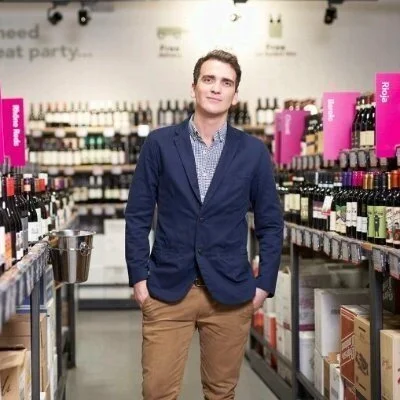
Jack Merrylees cut his teeth in the world of wine shifting boxes and driving vans. He lets us in on what he’s learned in the nine years since, from the power of words to always remembering who pays the bills – the customer.
I never really intended to work in wine PR. I think for most of my life I didn’t even know it was a thing people did as a career. But looking back on the last decade or so, I wouldn’t change a thing.
I first joined the wine industry in 2012. I’d just graduated with a degree in Medieval History and Archaeology, and was frantically applying for any role which would offer me some kind of salary, regular hours and something to get my teeth stuck into. Alongside applying to breweries and wine companies, I tossed my hat in the ring for building societies, tech firms and even legal practices. It’s fair to say I wasn’t picky, nor that I had a real vinous calling.
Majestic offered me a role shifting boxes and driving vans in Swindon. It was a tiny store (long since closed due to health and safety concerns). It had been burned down twice and was regularly robbed. More cave than shop. I loved it. I learned an absolute bucket load, from how to decipher a wine label to how to sell to customers (or at least bluff your way through it). A career in retail across the south west followed – managing branches in Totnes, Cirencester, Bath and beyond.
I’ve had no formal training in PR or marketing. I cut my teeth writing a blog mainly for my own enjoyment whilst studying for my WSET, combining wine and archaeology. It got picked up by management and before I knew it I was sitting down to be interviewed for Majestic’s PR Manager.
Since then I’ve looked after (at various points) corporate and consumer PR, social media, events, partnerships, content and internal comms. I’ve worked alongside different teams and individuals, and weathered some turbulent times (not least of which the sale period in 2019 and Covid more recently). I’ve also completed my WSET Diploma and am now on the MW programme too.
My advice
What advice would I give someone who wants to do something similar, to forge a career in wine communications or similar? I’m sorry to say, but I don’t think there are any shortcuts. Much of what I rely on, day to day, I learned from long hard slogs at the coalface of wine. You have to spend time with the product, in stores, at bars or at tastings. Whether you’re talking to a colleague, a journalist or customers – having an intricate, intimate knowledge of your product will always shine through.
Being able to then communicate that insight at different levels is also key, and judging your words accordingly. Wine is actually a very emotive subject, something people either cherish their ignorance in or desperately want to show off about. Pitching your words accordingly is key. You sometimes need to adapt quickly too (I prepared a tasting for a stag do once around football and wine clichés, and ended up fielding questions on climate change and vintage variation in Chablis). In the same way, you don't pitch the same story to a trade publication as say a red top. So it’s always best to research your topic and audience thoroughly too!
Much of my role is trying to replicate those ‘dinner table’ moments in the media. The kind of anecdotes which you pick up in wine which genuinely make the drinker raise an eyebrow. The hook. The ‘did you know…’ or ‘this is actually made…’ which entice a customer to dip into their wallet. Wine PR is trying to turn those little stories into full releases, or campaigns. It’s always thrilling to see a little tidbit you wrote appear in a newspaper or on TV. You should never, ever lose sight of who actually pays the bills – the customer. What is interesting to them is what truly matters.
My other big nugget of wisdom is that it is so, so vital to step away from it all. Wine is glorious, delicious and endlessly interesting to some of us. It can also suck the life out of a conversation, and the joy out of itself. When you feel you’ve lost the non-wino in the room, it’s time to move the conversation onto something else. Social media is a great example of something you can become obsessive over on this – and can have very little trickle down to actually shifting wine.I still fall into this trap almost every single day.
So for me, my editor is actually my brother. He has zero wine training, save for the bottles I take his way. His writing background is in utilities and construction. If he finds something I’ve written interesting, then there’s something there. And if he doesn’t, he’ll tell me straight up. The old adage is to ‘write drunk and edit sober’, it certainly helps if it’s someone else who is withholding the bottle.
Oh, and one last thing. Cut the word count wherever possible.